How Lake Views Changed From Painted Prospects to Camera Frames
Learn how the lake view changed from painted prospect to camera frame, and use a simple comparison to see what each viewpoint includes or leaves out.
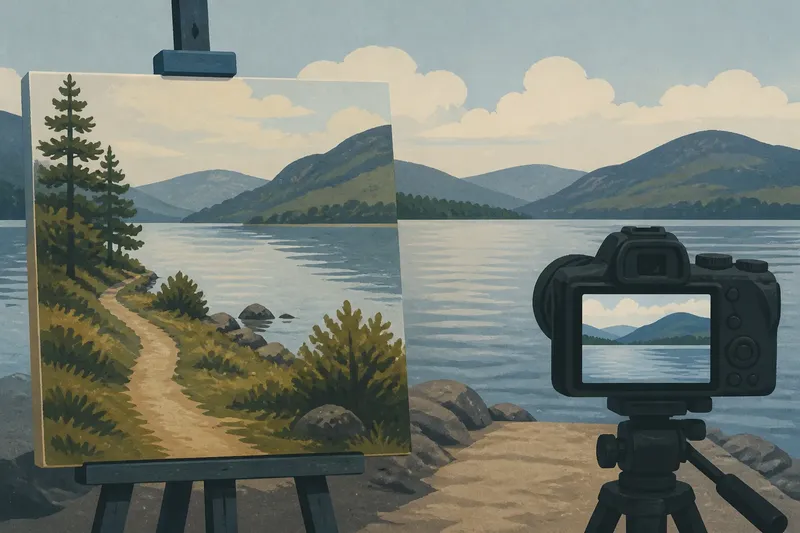
At a roadside turnout, someone lifts a camera toward a lake and catches the water, a strip of shore, and the hills beyond. A painter could have arranged a similar scene on canvas, but neither image is the lake itself. Each is a chosen view. The history of the framed lake view is less a straight march from painting to photography than a continuing question: who gets to look, from where, and what does the frame leave unseen?
What does a framed lake view leave outside?
A frame turns part of a place into a bounded scene. It sets edges, directs attention, and encourages viewers to read water, shore, sky, and distant land together. The viewpoint is part of that meaning. A road, public landing, hillside, or window offers a different relation to the same lake.
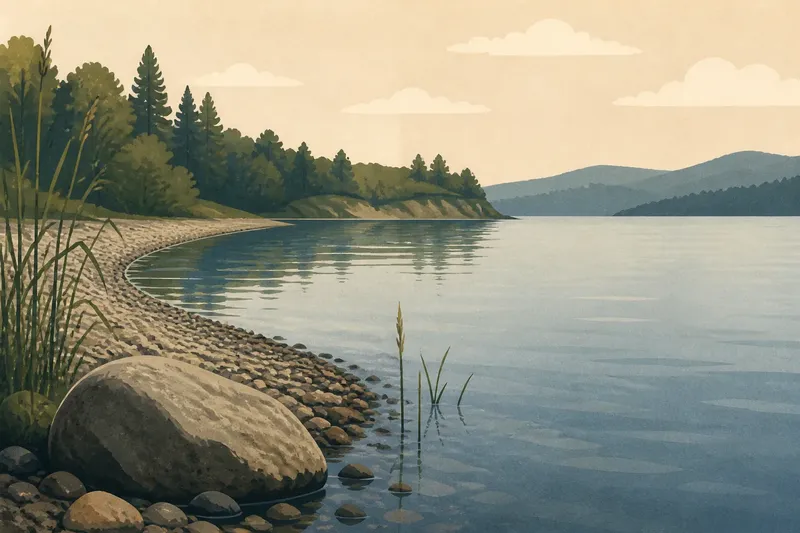
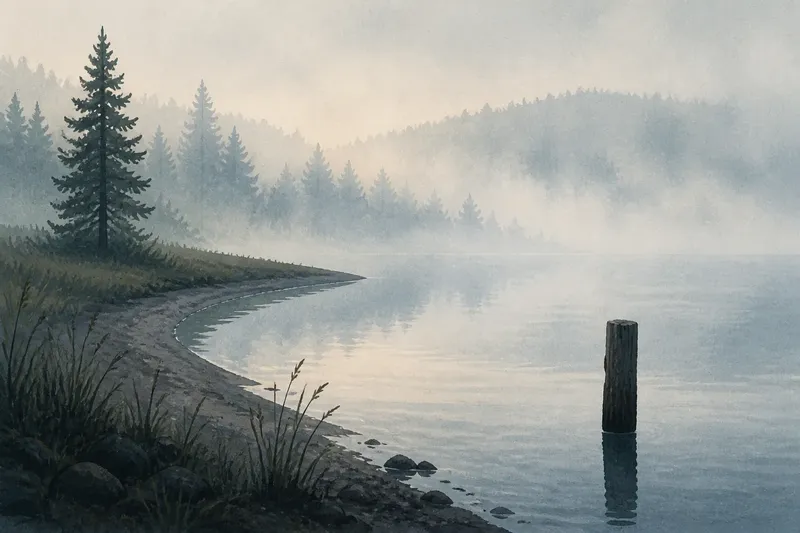
Consider two pictures of one shoreline. One may show the water as a broad expanse; the other may make a nearby bank feel immediate. Neither is a complete account. Each makes some details visible and leaves others beyond the edges.
How did painters shape the lake as a scene?
A painter could select a position that brought open water, land, and part of the shore into a single composition. Decisions about the frame and the arrangement of features helped the picture feel coherent. That coherence was an artistic construction, not proof that every detail appeared together exactly as painted.
Paintings of lakes and other landscapes vary widely in style and purpose. Rather than treating a broad view as a universal historical convention, it is more useful to ask what a particular picture does: Does it invite a distant survey, bring the viewer near the bank, or place the lake within a larger setting? The answer comes from the image’s visible choices, not from assuming that every painter used the same approach.
How did the camera change the lake view?
A camera records light from the position and direction selected by its operator. It can make a scene look immediate, but the frame remains selective. A photograph from a dock cannot show the view from the road behind the photographer unless that view is included in another image.
Photography also made it possible to repeat a view by returning to the same accessible position. A photographer can revisit a public landing or roadside pullout and frame the lake again. That repeatability belongs to a particular place and practice; it does not mean that every lake had a standard camera viewpoint.
For a useful comparison, look at what each medium shows rather than deciding that one is inherently more truthful. A photograph may preserve visible detail from one exposure; a painting may interpret or simplify it. Both still depend on choices about position, frame, and emphasis.
How can you compare a familiar lake view with another position?
Use two safe, accessible viewpoints and note what changes. Stay on public paths or permitted land, and do not step onto unstable banks or enter restricted areas. Keep the comparison focused on the viewing position, not on claiming that one angle is objectively correct.
- Check access: If both positions are open to the public, compare them; if one is private or restricted, choose another permitted viewpoint.
- Check the frame edges: If a road, dock, or nearby bank appears at an edge, note how it locates the viewer; if no such clue appears, record that the viewpoint is less obvious.
- Check the visible setting: If the image includes land beyond the lake, note how it connects the water to its surroundings; if it does not, treat the broader setting as unknown rather than assuming it is absent.
- Check the viewer’s distance: If near-shore details dominate, read the view as close to the water; if they do not, avoid inferring closeness from the lake alone.
- Check what is excluded: If a likely access point or built feature falls outside the frame, note that omission; if the edges do not reveal what is beyond them, leave the answer open.
- Check whether the views can be repeated: If the positions are safely reachable again, compare another image from each; if not, use the existing images and mark the comparison as limited.
Say you are comparing an invented photograph made from a public landing with an invented painting of the same lake. The photograph shows water and a far ridge but not the road behind the camera; the painting includes a path that leads toward the shore. First, note the visible clues: the landing in the photograph and the path in the painting. Next, record the limits: the photograph cannot establish what the road looks like beyond its frame, and the painting cannot establish that its path appeared exactly as shown. Then compare the implied positions: the photograph places its viewer at the water’s edge, while the painting suggests an approach from land. The resulting answer is specific but modest: the images offer different routes into the scene, not complete records of the lake.
What questions help explain a lake’s viewpoint?
Why does an elevated lake view feel like a survey?
From above, more of the water and surrounding land may fit within the frame. That can make the lake seem easier to take in as a whole, though the image still records only one direction and position.
Does a photograph show a lake more truthfully than a painting?
Neither medium is automatically more truthful about the whole place. A photograph records a selected view, while a painting may interpret or simplify one; compare their visible evidence and their limits.
What can a frame reveal about the viewer’s position?
Visible features such as a dock, path, road edge, or nearby bank can suggest where the image maker stood. If those clues are missing, the exact position may remain uncertain.
Why can a familiar lake view seem like the only natural one?
Repeated images can make a viewpoint recognizable. Familiarity does not make it inevitable: another permitted position may show a different relation between water, shore, and surrounding land.
What should you notice in a framed lake view?
Begin with the clues that are actually visible. Look for a landing, path, bank, or other feature that suggests where the image maker stood. Then inspect the edges and separate what the picture shows from what you can only guess lies beyond them.
That distinction is the useful part of the painted prospect to camera view comparison. It keeps a lake image from being mistaken for a complete account of its setting. A frame can show a compelling view; the details it omits are a reason to stay curious, not an invitation to fill them in as fact.